
Stop Guessing, Start Winning: The PCSO Lotto's 'Frequency Distribution Anomaly' Strategy
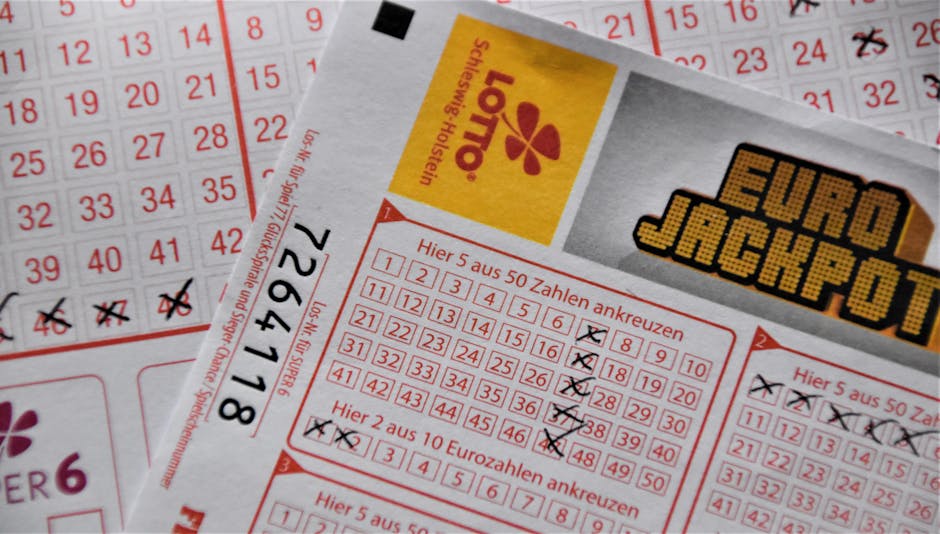
Are you tired of picking numbers based on birthdays, anniversaries, or just plain hunches? While there's nothing wrong with a little sentimentality, relying solely on luck in the PCSO Lotto is like trying to catch fish with your bare hands. It's time to bring some data to the table and explore a strategy that looks beyond the obvious – the 'Frequency Distribution Anomaly'.
Key Takeaway: This strategy focuses on identifying deviations from expected number frequencies to pinpoint potentially overlooked winning numbers.
Understanding Expected Frequency Distribution
What exactly is expected frequency distribution? Imagine a perfectly fair coin. If you flip it 100 times, you'd expect roughly 50 heads and 50 tails. The same principle applies to the PCSO Lotto, although with more complexity. Over a long period, each number should, theoretically, be drawn a similar number of times. This is the "expected" frequency.
However, lotto draws aren't perfectly random in the short term. Some numbers will inevitably appear more or less often than expected. This difference between what should happen and what actually happens is the "anomaly" we're looking for. This isn't about predicting the future, but rather identifying numbers that are statistically undervalued, and therefore, potentially due for a "correction."
Identifying and Analyzing Anomalies
So, how do we find these anomalies? First, you'll need a substantial dataset of past PCSO Lotto results. Thankfully, you can easily access historical data on sites like this page showing past lotto results. Once you have the data, calculate the actual frequency of each number. For example, in a 6/45 lotto, each number from 1 to 45 should appear roughly the same number of times over hundreds of draws.
Next, compare the actual frequency to the expected frequency. Calculate the difference. A positive difference means the number has appeared more than expected (over-represented), while a negative difference means it has appeared less than expected (under-represented). The larger the absolute value of this difference, the bigger the anomaly.
But don't just stop there! Consider how long the anomaly has persisted. A number that's been consistently under-represented for a long time might be a stronger candidate than one that's only recently dipped below its expected frequency.
Applying the Anomaly to Your Number Selection
Now comes the fun part: using this information to inform your number selection. The key is to consider both over-represented and under-represented numbers, but in different ways.
For under-represented numbers, consider including a few in your combination. The idea is that these numbers are "due" for a draw, and their statistical undervaluation makes them potentially valuable picks.
For over-represented numbers, be cautious. While they might be "hot," their high frequency could mean they're less likely to appear again in the immediate future. Consider excluding some of the most over-represented numbers, or at least pairing them with under-represented numbers for balance.
Remember, this isn't about guaranteeing a win. It's about making smarter, more informed choices based on statistical analysis. Think of it as diversifying your portfolio – you're spreading your risk across a range of numbers, based on their historical performance.
Beyond Simple Frequency: Context Matters
While simple frequency analysis is a good starting point, consider adding layers of complexity to your anomaly detection. For example, analyze frequency distributions within specific number ranges (1-15, 16-30, 31-45, etc.). Are there anomalies within these ranges that are masked by the overall frequency distribution?
Also, consider the position of the numbers drawn. Does a particular number tend to be drawn more often in the first, second, or last position? Analyzing positional frequency can reveal subtle biases in the draw process.
Finally, remember that the PCSO Lotto is a game of chance. No strategy can guarantee a win. This 'Frequency Distribution Anomaly' strategy is simply a tool to help you make more informed decisions and potentially improve your odds. You can also use AI-powered prediction tools to further refine your strategy.
Frequently Asked Questions (FAQ)
Does this strategy guarantee a win?
No. No lotto strategy can guarantee a win. The PCSO Lotto is a game of chance, and the numbers are drawn randomly. This strategy aims to improve your odds by making more informed choices.
How much historical data do I need?
The more data, the better. Ideally, you should analyze several hundred past draws to get a reliable picture of the frequency distribution.
Is this strategy applicable to all PCSO Lotto games?
Yes, the 'Frequency Distribution Anomaly' strategy can be applied to any PCSO Lotto game, regardless of the number of balls or the range of numbers. Just adjust your calculations accordingly.
In conclusion, while luck plays a role in the PCSO Lotto, informed decision-making can give you an edge. The 'Frequency Distribution Anomaly' strategy is a powerful tool for analyzing past results and identifying potentially undervalued numbers. Remember to play responsibly, set a budget, and never gamble more than you can afford to lose. Good luck!
You Might Also Like
May 10, 2026
Tired of Losing? Use the PCSO Lotto's Number Cooling Effect for Smarter Picks
Feeling unlucky with the PCSO Lotto? Discover the "Number Cooling Effect" – a smart strategy to analyze past results & pick potentially winning numbers. Boost your chances today!
May 9, 2026
Boost Your PCSO Lotto Odds: The 'Date-Linked Number Evolution' Strategy
Unlock better PCSO Lotto odds with our 'Date-Linked Number Evolution' strategy! Learn how to use meaningful dates to generate potentially winning number combinations. Increase your chances today!
May 8, 2026
Cracking the PCSO Lotto Code: The Number Harmony Balance Strategy
Unlock your PCSO Lotto winning potential! Discover the Number Harmony Balance Strategy in our guide. Learn how to choose balanced numbers for better odds.