
Apply the Fibonacci Retracement Sequence to Filter Your PCSO Lotto Number Combinations
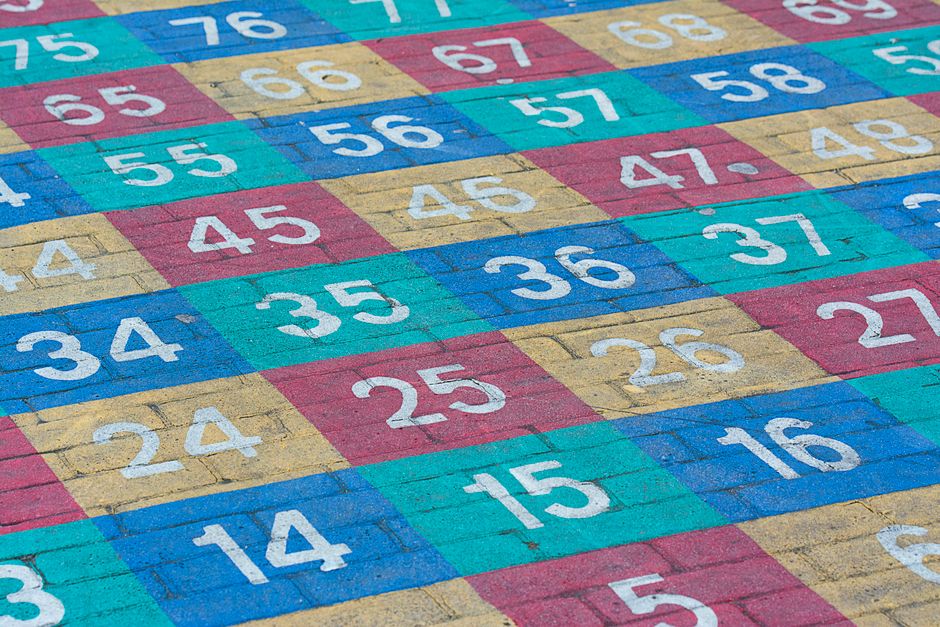
If you have spent any time analyzing PCSO lotto results, you know that the numbers drawn often feel like a chaotic jumble. However, many seasoned analysts look for hidden order within that noise. One of the most fascinating mathematical frameworks for filtering your combinations is the Fibonacci sequence—a series of numbers where each is the sum of the two preceding ones (1, 1, 2, 3, 5, 8, 13, 21, 34, 55). While the lottery is inherently random, using this sequence as a structural filter can help you avoid "human-biased" patterns, like picking consecutive numbers or dates, which are statistically overplayed.
Key Takeaway: Using the Fibonacci sequence as a filter allows you to select combinations that mirror natural growth patterns, helping you avoid common, crowded number sets that dilute your potential payout.
Understanding the Fibonacci Filter The Fibonacci sequence is found throughout nature, from the spiral of a shell to the arrangement of leaves on a stem. In the context of the PCSO lotto, we aren't suggesting that the balls "know" this math. Instead, we use it as a selection constraint. By limiting your picks to numbers that share a mathematical relationship or by using the sequence to determine the "gaps" between your chosen numbers, you effectively move your selections away from the patterns most players choose.
When you apply this to your lotto results analysis, you are essentially creating a "mathematical sieve." Most players choose numbers based on birthdays (1–31). By incorporating higher Fibonacci numbers like 34 or 55 into your set, you immediately distinguish your ticket from the majority of the crowd, ensuring that if you do win, you are less likely to share the jackpot with hundreds of others.
Applying the Sequence to Your Combinations To put this into practice, try the "Fibonacci Gap" method. Instead of picking six random numbers, select your first number, then add a Fibonacci number to it to determine your second, and so on. For example, if you start with 3, and add the next Fibonacci numbers (2, 3, 5, 8, 13), your combination becomes 3, 5, 8, 13, 21, 34. This creates a balanced, non-linear spread across the number pool.
You can also use our online tools to test how often these specific Fibonacci-based sets have appeared in historical draws. By checking the frequency of these "natural" patterns, you can adjust your strategy to exclude sets that are statistically stagnant, allowing you to refine your focus on combinations that feel more dynamic and less predictable.
Why Natural Patterns Outperform Human Bias Human beings are notoriously bad at being truly random. When we try to pick "random" numbers, we tend to space them out evenly or cluster them around significant dates. The Fibonacci sequence provides a "non-human" template. Because the sequence grows exponentially, it forces your selections to cover different sectors of the lotto grid, preventing the common mistake of picking all low or all high numbers.
This strategy is about discipline. By forcing yourself to adhere to a mathematical constraint, you strip away the emotional attachment to "lucky" numbers. Remember, the goal isn't to predict the future with 100% accuracy—which is impossible—but to build a portfolio of numbers that is mathematically distinct from the average player’s ticket.
Frequently Asked Questions (FAQ)
Does the Fibonacci sequence guarantee a win?
No. The PCSO lotto is a game of chance, and no mathematical sequence can influence the physical outcome of the draw machines. This method is designed to help you create unique combinations and avoid common, overplayed number sets.
Can I use this for all PCSO games?
Yes, you can apply the Fibonacci filter to any game, whether it is the 6/42, 6/45, or the 6/58 Ultra Lotto. Simply adjust the sequence to fit the maximum number allowed in the specific game you are playing.
Is it better to use the sequence as a base or a filter?
It is best used as a filter. Use the sequence to narrow down your list of potential numbers or to check if your current "lucky" picks contain too many human-biased patterns, then adjust them to align better with the sequence's natural progression.
Always remember that the lottery should be treated as a form of entertainment rather than an investment strategy. Play responsibly, never spend money you cannot afford to lose, and keep your expectations realistic. Good luck with your next draw!
You Might Also Like
June 15, 2026
Ditch the Hot Numbers: Use the Spectral Interval Analysis Method to Balance Your PCSO Lotto Combinations
Stop guessing your PCSO lotto numbers. Learn how to use the Spectral Interval Analysis method to balance your combinations and improve your winning strategy today.
June 13, 2026
Escape the Randomness Trap by Applying the Recursive Summation Pattern to Your PCSO Lotto Picks
Stop relying on random numbers! Learn how to use the Recursive Summation pattern to strategically analyze and improve your PCSO Lotto picks for better results.
June 11, 2026
Maximize Your PCSO Lotto Success by Applying the Segmented Quadrant Entropy Filter
Boost your PCSO lotto odds! Learn how to apply the Segmented Quadrant Entropy Filter to analyze patterns and maximize your chances of winning today. Read more.